family portrait

They learned to drive
a tractor at the age of eight.
could deliver a lamb
(or a calf probably)
before they went to school.
When I arrived at their house
I dodged dogs barking: ‘oh
he’ll never hurt you’ at odds
with my fear.
They always cooked for twelve.
We could play in barns
full of hay and straw, taking care
not to be crushed to death
by falling bales.
Their cats lived outside,
their litter tray a pile of sand.
They ate
everything on their plates, even the fat.
Grew their own vegetables and fruits,
enumerated runner bean hauls,
raspberry baskets, plum punnet
and made loganberry jam, whatever that was.

I liked books.

writing to order and other new things

So it’s been very interesting to be on a poetry course.  Spending time formally considering my own creative writing makes me realise that the last time I did this was when I was about thirteen years old, in English class, before everything turned into A-level essays on this and undergraduate degree studies on that.

Things I have done today that I have not done in the last twenty-seven years:

  1. Write a poem to order.  Here’s a poem about waiting.  Now you write a poem about waiting (here is ‘Waiting‘, unfinished)
  2. Read my own poem out loud to other people.
  3. Read my own poem out loud to a tutor and receive feedback.
  4. Have other known people (than my mum) take my poetry seriously.
  5. Listened to other people read their own creative work aloud to me.

The morning made me feel intensely passionate and vulnerable and dishevelled and lagging behind and out in front and questioning and excited.

Writing to order made me trip over words, try to be too clever, hit on a line of beauty, tumble over a cliché and want to go into hiding, and to come out of hiding.

Listening to others made me in awe, moved, wry, patient and outraged.

I have rarely had this many feelings in such a short space of time.

High point of the day so far:  A real poet said my  ‘wild night run‘ poem was ‘lovely’.  And she gave me some very interesting feedback about how to make it stronger, which I will work on in due course.

I am tired!

Now I must go and get some poems ready to read aloud later on.

Thank you for your encouragement!


year of the poem – philosophy

The writing and thinking about the (as yet unrevised) ‘washed up’ poem has left a domino rally of thoughts tipping over in my mind.  The idea that the poem was teaching me how to write it was phenomenal.  But the next thought topped it; perhaps it was true of all things.

Paying close attention is the essence, for me, of what it means to be a poet.  The poet leans in to the idea or thought or person or moment or object, listens intently with her whole being, and in that listening, the secrets of the poem are revealed.  No listening, no poem.  No attention, no inspiration. No patience, no-thing.

The idea that this might be true of all things did not itself come out of nowhere.  As I mentioned before, I read some lines a little while ago with the phrase ‘you are truly the poetry of God’. This idea of being poetry has lingered.  I have spent some of the time on the journey between my home and the café where I do my work pondering this; what if life was inherently poetic?  What does it mean to be the ‘poetry of God’ (whether or not one believes in an actual God)?  What am I learning from poems that is true of life?

In my (paid) work, there is a lot of time spent learning theory and models and then ‘applying’ it to people, to work with them better.  This has value, but recently it’s been making me restless.  What other ways might there be to learn better how to create together?

The idea that people (and projects, and all things) have a poetic nature is liberating because it simplifies things down to one thing; pay close attention; the person, thing or project (or self) will tell you who and what it is and is becoming. It will almost reel you in to its field so that you start thinking and acting in the way that will help create it. You do not have to be afraid that you don’t understand or know or have the skills yet, if you pay close attention it will reveal each step when you’re ready. It is beautiful.

This is also very helpful for me because I am continually doing work that I have never (or no-one has ever) done before.  I am constantly faced by projects which are an entire unknown.   I love this idea because as I lean into the project, listen carefully – even do actual listening to the people involved, it will tell me how to co-create it.

(A funny note:  I tried to make this thought process into a poem – I thought it would be fitting -but it would not go at all; it didn’t want to be a poem.)

washed not quite up

Yesterday’s poem, ‘washed up‘ is one of my first poems on extraplorer where I feel like I have not quite got to the proper form of the poem.  Most of the poems I write here seem to write themselves a little bit.  They slide out onto the page, and I usually work to some kind of internal rhythm as I write them, a kind of inner knowing of the form which I can pay attention to, and there it is.

The idea of washed up has been stolen by the Emily poem.  I had an idea for a collection of poems called ‘washed up’, and I might still try to make this because it is a glowing idea still.  But I was also very impatient to used the idea of washed up and somehow the Emily poem came along as I wrote the title.

I like most of the poem (and thank you readers who also liked it), but I think that it has got more to come.  I can tell that what I would really like to do is to make the poem more formally restrained than my normal very fluid writing.  The first stanza captures the feeling of this.

‘She set sail
for distant shores
from home.
She stayed indoors.’

The 3/4/2/4 syllables in each line I think set the pattern for what the other stanzas should be like (maybe with some variation).  For me, this rhythm emulates the rhythm of the sea.   I like the idea that the formal restraint could also emulate some of Dickinson’s writing (for example), while the sea rhythms would make it embody the idea of it being washed along the currents.

Another thing that maybe needs to be sorted out (I have only just realised) is that there is a clash of imagery between something in a bottle ‘Glass bottled / tears’ and a notebook which is what I originally envisaged.  I would like to think about these more and see if they should both stay or only one.

As with the formal constraint, I think the use of some rhyme here and there (‘shores’/’indoors’, ‘tread’/’instead’) makes it also have an element of homage to Dickinson’s writing.

I would also like to work out whether I really like the repetition of ‘small hand’ ‘distant shores’.  I think it might be too heavy-handed.

At the end of the day, I was too impatient to post the poem.  I really wanted to have written something, which is a very different feeling to feeling something is ready.  But also, I feel excited that the poem might be something I could craft. For me this is progress because until now I’ve been scared to do too much crafting in case I get self-conscious and can’t write.  Instead this poem is giving me a little gift because it wants to be crafted!  Amazing!  Maybe there are some poems that want to be and some that don’t (poem as a pet  metaphor has snuck in again, hooray, my favourite).

The poem is teaching me how to write a poem.

Awe.

(I would say ‘back soon’ but it might take me a little bit of time to work this out…)
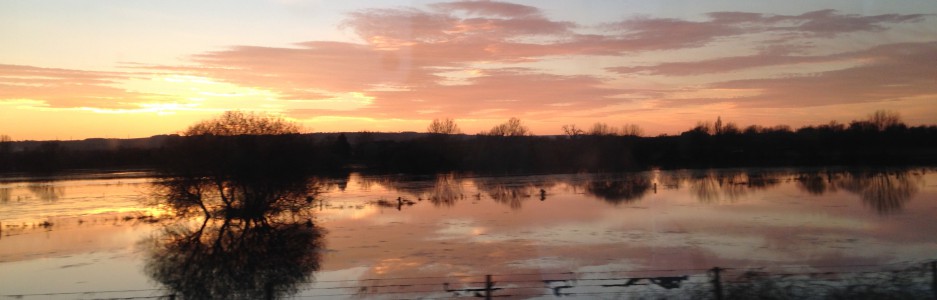
a beautiful diminishment of beauty

Get ready
for a beautiful diminishment
of beauty.

I am braver.
Expect the ragged,
messy and bits of
mud and blood,
thorns and straw
poking everywhere,
astray.

I will drag through a hedge
backwards and
not care a jot.
I will go flying,
fall face down and
laugh
brazenly,
with tears.

I will wade into
a torrent,
snare my bare
foot in stones
along its bed,
soak right through and
nearly drown,
with longing.

I will try so hard
to form the impossible
that it will form
in me,
and you,
so beware.

Beauty is on its
way out because
it’s coming.