deaths for you

I have died a hundred deaths for you.
Since we met…
Since we kissed, that first time.

And you talked about our daughter
Perilously.

The cherry blossoms were not out
but sunlight glimmered cooly
over the spring air
over my red date shoes tucked under the café table.

You disappeared.
Something you would do again and again and again.

So I died that death then,
Cried the tears out in the middle of a business trip.
Discovered peace.
‘Extraordinary grace’ a voice declared,
And I believed it.

I was staying in your city.
You were seeing someone else, and yet
there was power, was there not, in that air?
You could not stay away; yet honour prevailed.

I died that death then,
cried the tears out in my new friend’s country house garden.
Her father made waffles with cloudberry jam.
How could such sweetness exist?
With pain?

I lived in your absence.
You never wrote or called.
You policed yourself so well.
One day you introduced me.
Possibly naive.

There was no death there.
I’d died beforehand,
in fire and wonder
of my own making.

And then you came to find me, again
we kissed, under the Red Moon sky,
in the midsummer night of a picnic,
a bracing swim,
tender conversations,
delight in your eyes.

In a blink you had vanished.
You were ‘afraid’.
You were ‘running away’.

You met someone else.

I died such a death,
the like of which I’d never seen before.
Wild trust, goodness and silence,
knowing, fury
Pain, fire, tears and painting
My dreams caught alight.

I have died a hundred deaths for you, yes
And I am more alive than I have ever been.

sand dunes, gone

There were sand dunes there once.
I slid down them,
jumped, laughing.

There was a green field there once,
I looked right across,
to trees, to sky.

There was an old hotel there once.
I took tea, cosy
with my friends’ secrets.

There was honour here once.
The airwaves
tremble with bitterness today.

We had conversations here once.
Now, cables and ear-plugs.

I was at home here once.
I’m lost.

year of the poem?

Well, it was to be the ‘year of the poem’, n’est-ce pas?  Poem philosophy, poem habits, poem diary, poem-editing course…  How has that worked out?  you might wonder.

Interesting…

What worked out is perhaps more than I could have possibly imagined.  An adventure beckoned.  I followed.  I grew.

Now, it is true that very little poetry was involved.  A tiny snippet.  But if you have ever looked closely, you will know that extraplorer is about discovering more beauty through writing.

So it turns out that this year may be more a ‘year of the poem’ than any poem-a-day year could ever be.  Something deeper than poetry happened in the adventure of my writers residency in a beautiful country.  I grew and grew and grew and found myself believing that I might be, possibly, maybe, no am, a real artist.

Over the summer, all the logic switches of my self-perception have been dismantled.  Here are a few as an example.  Test: Was I real artist?  Switches: Could I paint?  yes/no.  No.  Had anyone paid me? yes/no. No.  Was my writing recognised by anyone in particular?  yes/no. No.  Did anyone ever ask me to write them something (or paint, or draw, or dance)? yes/no.  No.

In the logic switches that governed my self-perception (I had not realised quite how many there were), I failed every test.

Over the summer, those logic switches were revealed as impostors.

Test: Was I a real artist?

Could I paint? yes/no.  Well, really, is this relevant?  I have something I want to communicate, I have a means to communicate it (writing).  I create canvases in people’s minds.  I am learning to do it better.  I don’t think it’s really all about the paint.

Had anyone paid me? yes/no.  Hmmm, well, of course being paid would be nice, very nice, but really, is this going to be the be all and end all of the decision, that someone has suddenly for who-knows-what reasons, decided to pay me?  I write all the time, I photograph, dance and play the piano.  I make beautiful transformations with people.  Are you really going to pin me down to the question has anyone paid?  People pay for drugs, cheap plastic tat in Poundland.  I don’t think I’m going to be aligning my identity with money anymore.

Was my writing recognised by anyone in particular?  yes/no.  Who do you mean by ‘in particular’?  This looks suspiciously where anyone who does love my writing gets put in the category ‘no-one in particular’ and some imaginary unknown people get put in the category ‘in particular’.  Who is this person who sets the rules for ‘in particular’?  What are they up to? What are their credentials?  Is it the same people who put on lacklustre and dispiriting exhibitions of arch postmodern commentary pseudo-paintings and we’re-all-doomed ‘installations’ purporting to represent the interactions between human beings and the environment?   Until this ‘in particular’-setting critic makes themselves better known, no more airtime for the ‘in particular’ category.

Did anyone ever ask me to write them something (etc)? yes/no.  Well, actually yes, a whole academic book.  Or at least they accepted it.  But that is beside the point, because who cares if I was asked.  Now it strikes me that this ‘anyone’ has an implicit lurking ‘in particular’.  It occurs me that ‘anyone’ is not just anyone, but someone.  In fact, yes, my nephews and nieces ask me to tell them stories all the time, my clients ask me to write them a training.  I’m asked to write talks and references.  Not what you had in mind?  Who cares!  I write all the time and I will write more!

So yes, I write poems, maybe I am a poet.  If I would like to be, I am; if I’m not ready, I’m not.  I write books, I am an author (this one is a fact already).  I take photos, I am becoming a photographer.  Who knows who I am, who I might be, who I might be becoming.  I am a mystery and I will do whatever I like.

The year of the poem has taken new directions.
As well it might.
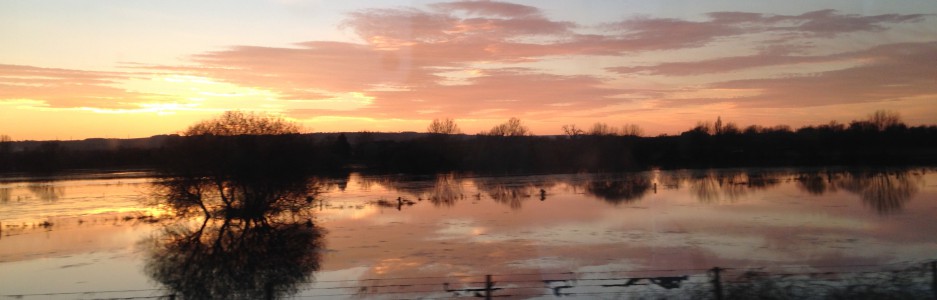


year of the poem – philosophy

The writing and thinking about the (as yet unrevised) ‘washed up’ poem has left a domino rally of thoughts tipping over in my mind.  The idea that the poem was teaching me how to write it was phenomenal.  But the next thought topped it; perhaps it was true of all things.

Paying close attention is the essence, for me, of what it means to be a poet.  The poet leans in to the idea or thought or person or moment or object, listens intently with her whole being, and in that listening, the secrets of the poem are revealed.  No listening, no poem.  No attention, no inspiration. No patience, no-thing.

The idea that this might be true of all things did not itself come out of nowhere.  As I mentioned before, I read some lines a little while ago with the phrase ‘you are truly the poetry of God’. This idea of being poetry has lingered.  I have spent some of the time on the journey between my home and the café where I do my work pondering this; what if life was inherently poetic?  What does it mean to be the ‘poetry of God’ (whether or not one believes in an actual God)?  What am I learning from poems that is true of life?

In my (paid) work, there is a lot of time spent learning theory and models and then ‘applying’ it to people, to work with them better.  This has value, but recently it’s been making me restless.  What other ways might there be to learn better how to create together?

The idea that people (and projects, and all things) have a poetic nature is liberating because it simplifies things down to one thing; pay close attention; the person, thing or project (or self) will tell you who and what it is and is becoming. It will almost reel you in to its field so that you start thinking and acting in the way that will help create it. You do not have to be afraid that you don’t understand or know or have the skills yet, if you pay close attention it will reveal each step when you’re ready. It is beautiful.

This is also very helpful for me because I am continually doing work that I have never (or no-one has ever) done before.  I am constantly faced by projects which are an entire unknown.   I love this idea because as I lean into the project, listen carefully – even do actual listening to the people involved, it will tell me how to co-create it.

(A funny note:  I tried to make this thought process into a poem – I thought it would be fitting -but it would not go at all; it didn’t want to be a poem.)

found poem – a stroll in Brussels, autumn 2015

To our heroes.

The unicorn doesn’t take the bus.
It flies from star to star.
Do the same.
Love life.  And smile.

On May 14th 2009, a young sequoia
from the family garden
dead from an unknown disease
is cut down.

May it please the One who Is to
open the human heart to the
full measure of all life.

A thunderous landing
manifests its weight for a final time
as it falls
prostrate.

To enter into the unknown
involves a willingness
to fully experience and study things we don’t understand
and to embrace that lack of understanding.

I have a dream.
Restoration of networks
of energy and public illumination.

Do you?

Sources:  War memorial near Les Etangs d’Ixelles; sign on lamp-post near Ixelles; description, Royal Museum of Fine Arts; engraving, Marguerite Yourcenar Park; book in museum gift shop; advertisement; street sign; advertisement.

All translations mine.