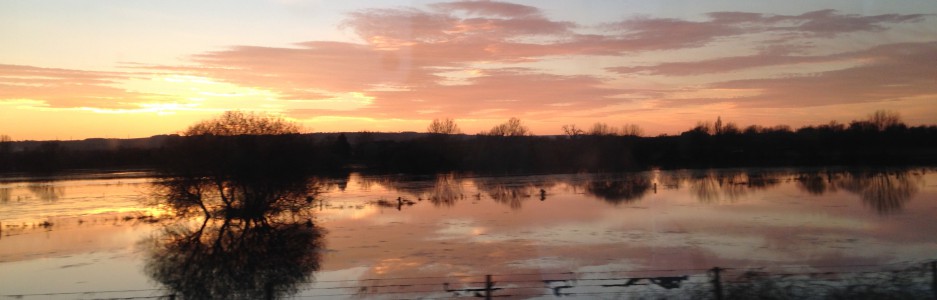
toppled

I toppled
into
a
hole
the other night.

I didn’t realise
I was falling
until I landed
in the mud.

The cold mud
untouched by light
for
ever such a long time.

At first I thought
I was mistaken.
The cold mud started
licking at my
bare ankles.

I didn’t realise it was
pitch dark
at first.
My mind was busy.

But then the
cold crept up
into my heart
and I was afraid.

I felt too ashamed
to call out.
But an older
wiser me insisted.

I picked my most
reliable friends.
They crowded around.
The hole was too small
for a visitor.

They sent a hug,
a happy story,
encouragement.
‘You’ve survived
holes before!’

‘Don’t worry you’ll be
out before you know it!’

‘You only ever fall into
holes when you’re
concentrating on something
very important!’

Slowly, their words
formed a ladder of grace.
supplemented with
romantic comedies,
the ironing, and
favourite piano tunes.

But the cold held on.
Outside the hole,
I was afraid of falling.
Looked only at the ground,
missed the sky, and stars,
missed smiles and stories.

In the end, I stopped.
I dug my cold heart out
and warmed it in my hands,
whispered to it,
lifted it up high and
showed it all the wonder
of the universe.

‘The world is
full of hope.’
I told it.  You have
nothing to fear.
It is true that holes
exist.  But they are
rare.  Look!
The beauty of the
world is yours to
choose.  Do not
let it slip away
through fear.’

My heart sat
trembling in my hand.
Time stood still.
Eventually the shaking
stopped.  My heart
grew warm again.

I placed it carefully
within me,
and walked on
with a slight spring
in my still-cautious
steps.

recovery

So it’s getting near to the piano exam, and an important and underrated skill is coming to the fore:

Recovery.

It turns out that despite my own deep desire to avoid mistakes, this is not a realistic goal.  In fact, the more pressure that is put upon my performance to be exquisite, like the concert pianist I watched online, the more likely it is that my fingers will hesitate, trip over themselves and take a tumble.

So as well as practising getting the notes, pace, rhythm, tonality, expression right, I am also practising keeping going when it goes wrong.

I am getting accustomed to the heart-lurch and sense of impending doom, and telling myself this is part of the adventure of performance.

I am getting used to trusting that my fingers will be able to find their way back to harmony and beauty.

I am training my inner monologue not to equate a small stumble with a total collapse of the piece.

I am learning to hop my fingers out of the ditch of the wrong keys and back on the horse of the right keys.

I am realising that by starting at a manageable pace, I am more likely to be able to sustain a polished performance.

I am growing cannier in identifying ‘stepping stones’ where I will be able to regroup if I have a sudden nerve-jangling moment.

I am reminding myself to breathe deeply and be in the present before I set off.

I am noticing that if I look up at the music, if I anticipate a little,  I play better than if I look down at the keys.

I am discovering that mistakes are part of live performance, and it’s how you deal with them that counts.

I am learning how to live.