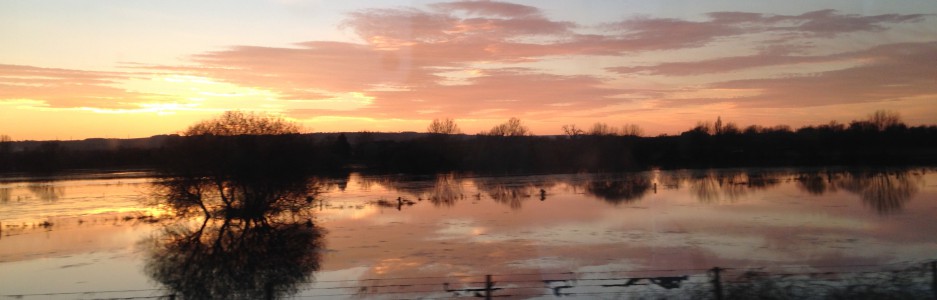
year of the poem?

Well, it was to be the ‘year of the poem’, n’est-ce pas?  Poem philosophy, poem habits, poem diary, poem-editing course…  How has that worked out?  you might wonder.

Interesting…

What worked out is perhaps more than I could have possibly imagined.  An adventure beckoned.  I followed.  I grew.

Now, it is true that very little poetry was involved.  A tiny snippet.  But if you have ever looked closely, you will know that extraplorer is about discovering more beauty through writing.

So it turns out that this year may be more a ‘year of the poem’ than any poem-a-day year could ever be.  Something deeper than poetry happened in the adventure of my writers residency in a beautiful country.  I grew and grew and grew and found myself believing that I might be, possibly, maybe, no am, a real artist.

Over the summer, all the logic switches of my self-perception have been dismantled.  Here are a few as an example.  Test: Was I real artist?  Switches: Could I paint?  yes/no.  No.  Had anyone paid me? yes/no. No.  Was my writing recognised by anyone in particular?  yes/no. No.  Did anyone ever ask me to write them something (or paint, or draw, or dance)? yes/no.  No.

In the logic switches that governed my self-perception (I had not realised quite how many there were), I failed every test.

Over the summer, those logic switches were revealed as impostors.

Test: Was I a real artist?

Could I paint? yes/no.  Well, really, is this relevant?  I have something I want to communicate, I have a means to communicate it (writing).  I create canvases in people’s minds.  I am learning to do it better.  I don’t think it’s really all about the paint.

Had anyone paid me? yes/no.  Hmmm, well, of course being paid would be nice, very nice, but really, is this going to be the be all and end all of the decision, that someone has suddenly for who-knows-what reasons, decided to pay me?  I write all the time, I photograph, dance and play the piano.  I make beautiful transformations with people.  Are you really going to pin me down to the question has anyone paid?  People pay for drugs, cheap plastic tat in Poundland.  I don’t think I’m going to be aligning my identity with money anymore.

Was my writing recognised by anyone in particular?  yes/no.  Who do you mean by ‘in particular’?  This looks suspiciously where anyone who does love my writing gets put in the category ‘no-one in particular’ and some imaginary unknown people get put in the category ‘in particular’.  Who is this person who sets the rules for ‘in particular’?  What are they up to? What are their credentials?  Is it the same people who put on lacklustre and dispiriting exhibitions of arch postmodern commentary pseudo-paintings and we’re-all-doomed ‘installations’ purporting to represent the interactions between human beings and the environment?   Until this ‘in particular’-setting critic makes themselves better known, no more airtime for the ‘in particular’ category.

Did anyone ever ask me to write them something (etc)? yes/no.  Well, actually yes, a whole academic book.  Or at least they accepted it.  But that is beside the point, because who cares if I was asked.  Now it strikes me that this ‘anyone’ has an implicit lurking ‘in particular’.  It occurs me that ‘anyone’ is not just anyone, but someone.  In fact, yes, my nephews and nieces ask me to tell them stories all the time, my clients ask me to write them a training.  I’m asked to write talks and references.  Not what you had in mind?  Who cares!  I write all the time and I will write more!

So yes, I write poems, maybe I am a poet.  If I would like to be, I am; if I’m not ready, I’m not.  I write books, I am an author (this one is a fact already).  I take photos, I am becoming a photographer.  Who knows who I am, who I might be, who I might be becoming.  I am a mystery and I will do whatever I like.

The year of the poem has taken new directions.
As well it might.


poetry resvolutions

I have decided to (secretly) pronounce my 2016 the ‘year of the poem’. I have nearly finished the book project which I have been working on for a number of years (along with my other work). There will be more spare time, and some of this I want to devote to a more sustained rhythm of poetry writing.  I have been inspired by my friend’s book to explore more of my creative history and to be braver about actively doing the things that will make me a better poet.  This includes things like writing every time I have even a small idea, sending more poetry to competitions and finding more places where I will receive advice from people I trust and respect.  I might even host a reading, although the ‘look at me’ nature of this concept makes me squirm.

Directly approaching poetry makes me feel a bit worried.  My experience of poetry is a lot like looking at the stars only out of the corner of your eye, so that you really see them sparkle whereas if you look straight on they diminish.  I feel a risk that if I really consider poetry on purpose it will run away and I will be left with the options of abandoning it with fake insouciance or chasing it down like an errant date. ‘Call me! Text me!’ (etc).

But not approaching it directly also has risks.  I feel the risk that the poems are a bit floaty; even that they show signs of neglect. With more input they might become more muscular and vital. I want to balance the tenderness of my writing with real fire and I feel that for this they may need extra help.

These are the kinds of things that the year of the poem might help me explore.

In the spirit of The Happiness Project, I am going to decide on some poetry resvolutions. I have not thought these through yet but I will be back with some options and a decision. The resvolutions need to be the right shape; not too restrictive so I get unhappy and not too vague so I don’t grasp them.  I have decided to call them resvolutions (silent v or silent s as you wish) because I hope over time the impact of the small steps will be large.

Happy New Year of the Poem!


raw materials

Today in London I went to an art supplies store.  I had an idea for a picture that I wanted to make, but I didn’t know how to make it, because my experience of making pictures is limited to two particular domains only – black line drawings, sometimes coloured in, on white paper for flipcharts and cards.

The art supplies shop assistant was an expert in helping inexperienced customers.  Patiently, she asked questions that helped her track from her vast experience right to the door of my very narrow experience, and my even narrower requirements (despite the narrow experience I have very specific parameters).

The result I wanted to capture was large-scale simple black line drawings coloured in as if with felt-tips.  Slowly we cycled through the options; acrylic paint ‘pens’ (no, too much like paint), watercolour ‘pens’ (too much variation in shade when used to colour in – due to layering, apparently), fine-liners (too fine), and then a kind of brush-like felt-tippish pen (not sure of the technical description) that came closest to matching on the little tester note book the idea carried somewhat stubbornly in my mind.  Even better, this pen was available in the large multi-coloured set and a myriad additional subtle shades that I had been hoping for.  I was on the brink of realising the vision I had earlier attempted to capture in my email to Caran d’ache customer services asking if they made (/request that they would invent) flipchart pen versions of my favourite felt-tips (no reply).

But the process did not finish there.  In my mind’s eye, and slightly deluded by my perception of its ‘proper artist’ status, I had thought of drawing straight on to a (admittedly pre-prepared) canvas, but, it turned out, the effect I was looking for (a dye rather than paint effect) would not work on canvas.  So the process started again, watercolour paper (no, too bumpy), cartridge paper (too thin), mountboard (too thick) and so on to something called ‘papier epais’ (thick paper, extra appealing in French) which seemed just right – but I would need a larger size.

My raw materials selection afternoon has reminded me of a profound truth.  Each of us constitutes the ‘raw materials for some particular kinds of creation.  In the art shop, I could choose the raw materials for my vision.  In real life, it is the raw materials that are given, and my role is the expression of these into the artistic work of living a life.  The shop assistant reveals the a great call to a deep understanding of the raw materials of each other, so that we can have expectations that suit the roles others are equipped to play, and that our collaborations in relationships, in work, in community life match what each is able to offer with what each is able to receive.  This is creative work that never ends.

found poem, London, autumn 2014 – commentary

So as you know I have been hesitating on whether to comment on poems or whether to leave them to their own devices.  On the one side is the risk of over-explanation (see ‘on leaving things unsaid‘), on the other is my memory of my sixth form project on metaphysical poetry where the explanations of teacher unlocked meaning and allowed me to take part in the poem in a way I would never have done otherwise.

A reader commented about the London found poem that ‘I don’t understand it but of course understanding isn’t a valid expectation to have’, and this has been resonating in the echo chamber of my mind ever since.  Is it true?  I think understanding is a wonderful thing to have.  Understanding brings illumination, and even though it will always be partial, this brings a powerful sense of connection, and warmth and excitement.

So here I am going to put a little bit about what the poem revealed to me, and why the things I saw in London on that adventure turned out to be in the poem.  Of course, my own understanding is only partial, but maybe it will provide some interesting light.  I will also show where I have changed the poem (in two places) since I originally posted it.

So first of all, I don’t have any agenda in the found poem discovery process.  All I do is be on the alert during my time in the city for fragments of text which stand out for some reason.  Then, when I get home, I let them all sit around until they form themselves into verses.  To be honest, I didn’t really think that the things I’d seen that day in London made a poem.  I felt a bit disappointed and I almost didn’t even embark on the discovery process.  But once I’d written out the bits of text (recorded on my camera), unexpected connections started to emerge.

What struck me straight away is that there is a theme of restlessness, and design, and home.  The theme of design is not a surprise because I was at the design museum, but what came together is the idea for me that our lives are our homes, and that we have a role to play in designing our life-homes.

From this, the verses started to sing to each other.  The first question unsettles us as to whether we have become stuck in a rut.  And then the answers also have that fretful quality.  I have now changed lines three and four around, as I realised that the ‘sheer frustration’ line is an answer to the companion line.

I then loved the mix of very everyday imagery (about the pencils), the idea of story versus limited options, the challenge of designing a home and the emotional power of that, and the fact that are homes-lives are also kinds of monuments of what we value, and the powerful question as to what others might make of our choices.

I was a bit hesitant about allowing the Charity text fragment into the poem; it felt a bit out of place.  But I also quite like the out-of-place things intruding.  Out-of-place things can put the mind into an interesting state of trying to discover a meaning.  So in time this stanza has made me dig.  The meaning that has arisen for me is that it links to our own possible poverty (of meaning, of aspiration) in our lives, and how that allows a dynamic where we need charity (also an old word for love) to connect us to abundance.

The poem then connects the idea of home and meaningfulness to belonging, which is expressed through the words about membership and uniting.  Our actions to address our inner restlessness may also need hard work (engine rooms), courage (bold moves), and experimentation (hop on hop off).  In these verses, the work of life-design is taking shape.

I also hesitated over and then relished the inclusion of the reference to the story of our fall from grace, because it also helps to point to where we may have sewed flimsy ‘clothes’ to cover up the nakedness we feel in our lives.  This question cannot be neatly tidied away, so it leaves a lasting vulnerability within the poem itself.

Before the poem closes, there is an appeal not to lose sight of children in our life designs.  Children embody our shared vulnerability, and this appeal then also calls us not to create lives that fail to acknowledge this.

The close then returns to mystery, to happenstance, along with searching and intentionality, which resonates back to the idea of design.  The first line is lived intensely in the present, emphasising the continuity of the process of life-home creation.  The second line evokes total commitment.

Originally the poem ended with the exhortation ‘Go to it’, but on reflection, it feels too heavy handed to address the reader in this way.  So this has been edited out, and instead the reader can identify with the speaker in the last lines.  Here the ‘you’ is less direct, and the reader then has more freedom to choose to join the speaker in the exploration of ‘everything’.

Since I have understood the poem in this way myself, I have enjoyed the sensation of life-homes being created, amended and adapted, of the importance of our vulnerability and the joy of a ‘hop on hop off’ approach to experimenting with new hobbies, ideas, reading, and so on.  I continue to enjoy the challenge of the first line, which reminds me to keep adventuring, to be brave to explore new things, and to be alert to places where my life-home habits and routines become confining.

inventory of subpersonalities – commentary

The minute I heard the word ‘subpersonalities’, I was fascinated to find a concept that allowed me to explore different aspects of myself as if they were actual people.  The idea of different inner ‘me’s is something that I had been aware of for a little while.  My name lends itself to multiple nicknames, and it fascinated me why people chose a particular diminutive (interesting word) and what it meant to them and to me.  I also recalled my childhood love of playing roles from The Great Escape; I was fascinated by which role was chosen by which sibling, and by the potential revealed in those early choices.  I was aware too, of the odd diversity of my reading, which over the last two or three years has encompassed all my childhood favourites, mountaineering literature from the 1950s, Russian history and culture, stories from Bletchley Park, and several times, The Happiness Project.  The choices seemed so disparate as to belong to different readers, yet they were all me.

Since I started writing extraplorer, I’ve had the phrase ‘inventory of subpersonalities’ in my head as the starting point of a kind of poem.  Now that I’ve had a look back at the sheet of paper where I first drew and labelled them all, it occurs to me that it might prove interesting at some point to give each one an actual voice and see what happens.

A couple of notes on the poem:  The mixture of capitalised and lower case first letters is intentional as the words appeared in my mind complete with the variation in these aspects and I think it is significant.  Also, originally I just wrote down the list of subpersonalities, but it seemed incomplete.  Then I added the story of their discovery, but still the list itself seemed too clumsy, too concrete for something experienced as fleeting, shifting.  The addition of the inverted commas made the poem coincide with my inner feeling.  This makes the subpersonalities relational.  You can hear the poet identifying them, rather being faced with a flat kind of list.  This made the poem feel complete in a way that I felt happy with.

The inventory of subpersonalities might initially seem a bit spooky – after all we are reaching towards the fringes of our consciousness – but really it is merely a development of our ordinary everyday experience of the different roles we play – daughter, sister, worker, friend.  Some of the ones in the poem are everyday – (‘businesswoman’ for example) and some are metaphorical (‘enigma code-breaker’, sadly).  Each image holds a kind of magic and fascination that is big enough to grow into, or evocative enough provide a warning (it is not healthy to spend too long as an orphanage worker or speck).