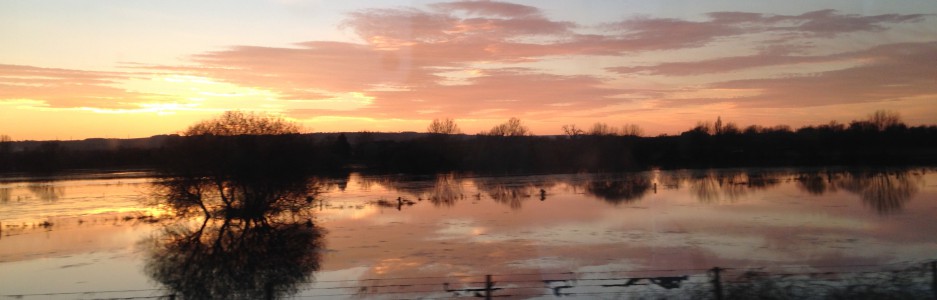
flat Christmas moment – commentary

I have updated ‘flat Christmas moment‘ with two short additional lines. When I wrote the poem, at the very moment of completing the last line, the door did open and my parents returned from their walk in the woods.  I hummed and ha’ed about leaving the moment adrift, or bringing it to the same halt as experienced by the poet.  On balance I think the change of pace of the return of people adds an element of wry humour and a greater sense of reality. After all, the poem is about a moment, not life drifting on forever.

But I am open to new thinking…

reflections on blogging, one month review, ‘discovering more beauty through writing’

The subtitle to the blog ‘discovering more beauty through writing’ has also been on my mind.  I wrote it without any real reflection; this in itself is important for my work.  Writing is the place where I discover what I think and feel about certain things.  It seems to arrive onto my journal, a screen, a letter and it’s at that point that I find out what is there.  I know there are some people who mull over their work forming it in words in their mind before they write it down, but I’m not made like that.  Now I think of it, it’s like brewing tea (which I also love), I’m aware of phrases swimming about in my head for a certain period of time before they pour out in a writing stream.  I try to stay out of their way, because if too much conscious, analytical me gets in the way, they lose their naturalness.

There are several ways that I am discovering beauty through writing.  I love beauty – in nature, in things, in people, in adventures – and over time I have come to see beauty as a place in which magical things can happen, things like hope, healing, courage, revelation, insight.  In my own writing, I am trying to grow an attitude that sees more beauty in everything, but also to pay attention to particular instances of beauty, almost to amplify it in a world that is so often full of distress.  In addition to this, I have found that sometimes I can write about hard things and discover the beauty in them as I write.  This is because writing brings understanding and meaning, and it is meaning that can make difficult things bearable, and even redeem them and transform them into something full of honour and grace and depth.  For me, this is the true magic of writing.

Finally, knowing that I might want to write at any moment increases my attunement to the present.  It heightens my sensitivity to beauty all around me.  It makes me be on the alert for treasure that I can catch in my writing net and bring home to nourish people with.  It’s so much fun!

reflections on blogging, one month review, part one, ‘scrapbook of fragments’

Well, I’ve managed a more conventional timescale for my blogging review this time.  A month.

Unlike seventeen days, a month is enough to become aware of patterns in yourself, not knowings, hopes, delights, perplexities.  Over the last week, especially, I have become aware of ongoing questioning of some aspects of what I am doing, both in the critical-inquiry sense and also the curiosity sense.

However, it also turns out that a month is also long enough to create deeper reviewing thoughts than I expected.  So I am going to post this review in parts…  Here’s part one.

In my ‘about’ page, I talk about this being a ‘scrapbook of fragments’, and this is indeed exactly what extraplorer has turned out to be.  I have felt settled enough with everything to post it (the one thing I felt unsettled about I took down), but I am aware that it is all higgledy-piggledy everything together as if I’d tipped a box of myself out onto the floor.  This is definitely liberating for me in terms of what to write, but it also does make me feel slightly uneasy, like I should tidy it up.  I peek at other blogs and think, ‘hmmm drop-down boxes with categories might be nice’.  But then I also like the idea that a reader could have an exploratory experience because everything is not neatly labeled and put in filing cabinets.

The other aspect of the ‘scrapbook of fragments’ is that it does not have an overarching story.  I would quite like to make one of these, like, ‘this is who I am and poem a means this and thoughts b means that’, but I’m aware that my desire to impose this kind of order will set me up to conform to what will at some point turn out to be a limiting narrative arc.

In my original idea, I thought that my ‘scrapbook’ might hint at some kind of underlying unity, and I think I do have a sense of this.  One thing I love is the ‘cloud’ of tags, and I like to see it and think of the nice things that there are to write about in the world.  Admittedly I do err on the positive side with my tag words, so it is true that ‘darkness’, ‘death’, ‘sadness’ don’t feature in the tags although they do have a place in my writing.  But still, that is part of what I want to achieve with my work – to point towards beauty and truth and love, both despite and because of the hard things.  Besides, sad things get plenty of attention without me adding to it.

This leads me nicely on to part two, ‘discovering more beauty through writing’.

inventory of subpersonalities – commentary

The minute I heard the word ‘subpersonalities’, I was fascinated to find a concept that allowed me to explore different aspects of myself as if they were actual people.  The idea of different inner ‘me’s is something that I had been aware of for a little while.  My name lends itself to multiple nicknames, and it fascinated me why people chose a particular diminutive (interesting word) and what it meant to them and to me.  I also recalled my childhood love of playing roles from The Great Escape; I was fascinated by which role was chosen by which sibling, and by the potential revealed in those early choices.  I was aware too, of the odd diversity of my reading, which over the last two or three years has encompassed all my childhood favourites, mountaineering literature from the 1950s, Russian history and culture, stories from Bletchley Park, and several times, The Happiness Project.  The choices seemed so disparate as to belong to different readers, yet they were all me.

Since I started writing extraplorer, I’ve had the phrase ‘inventory of subpersonalities’ in my head as the starting point of a kind of poem.  Now that I’ve had a look back at the sheet of paper where I first drew and labelled them all, it occurs to me that it might prove interesting at some point to give each one an actual voice and see what happens.

A couple of notes on the poem:  The mixture of capitalised and lower case first letters is intentional as the words appeared in my mind complete with the variation in these aspects and I think it is significant.  Also, originally I just wrote down the list of subpersonalities, but it seemed incomplete.  Then I added the story of their discovery, but still the list itself seemed too clumsy, too concrete for something experienced as fleeting, shifting.  The addition of the inverted commas made the poem coincide with my inner feeling.  This makes the subpersonalities relational.  You can hear the poet identifying them, rather being faced with a flat kind of list.  This made the poem feel complete in a way that I felt happy with.

The inventory of subpersonalities might initially seem a bit spooky – after all we are reaching towards the fringes of our consciousness – but really it is merely a development of our ordinary everyday experience of the different roles we play – daughter, sister, worker, friend.  Some of the ones in the poem are everyday – (‘businesswoman’ for example) and some are metaphorical (‘enigma code-breaker’, sadly).  Each image holds a kind of magic and fascination that is big enough to grow into, or evocative enough provide a warning (it is not healthy to spend too long as an orphanage worker or speck).

thoughts about things – fear

One of the things I have been learning to confront recently is fear.  I am very lucky to have been brought up in a secure, happy, loving environment, so fear is not my default inner mode.  Of course I have normal fears like snakes, rejection, pain and loss, but overall, it is not something that bothers me that much.

This offers a luxury that not everyone has; embarking intentionally on journeys, adventures and projects that you know will be beyond you and at some point will entail you facing a fear.  And if you want to embark on big adventures, it’s also worth practising facing small fears so you will be prepared when a big one strikes (like Walter Bonatti and his friends sleeping on their balconies in midwinter to prepare for their summit bids).

(Aside:  Writing this has already taught me something about my thinking; it is very situational.  I don’t think about things in the abstract but in the contexts in which they take place).

So situation one is playing the piano in front of people.  I played and performed fairly happily as a child, but when I returned to playing the piano after a big gap, I found that performing actually terrified me.  Now, this was quite interesting in itself; I did not feel fear when thinking of performing.  I sat quite happily in the audience of the ‘concert’ organised by my piano teacher while her eight year old pupils played for their mums and dads.  Only at the very moment where I took my place at the piano did I fear an overwhelming woosh of terror causing me to  a) be unable to see the music b) shake from head to toe (including fingers) and c) feel physically sick.  Even playing to my own mum, I would feel the whine of inner fear spreading out from somewhere to everywhere.

(Aside:  Writing this has also taught me another thing about my thinking, it’s anchored in my personal experience.  I tried writing it as if it was an objective thing, but this doesn’t seem to be possible).

From tackling this fear I have learnt some useful things:  Fear is just chemicals and it is not just chemicals.  There is a physical reality (chemicals), but the physical reality does not capture the felt experience of fear.  I could probably take something to diminish the chemicals, but there would still be something happening within me that is important.  Secondly, fear can be explored and this makes it diminish.  I don’t know if it’s the exploration (understanding) or the familiarity (recognition), but repeatedly putting yourself in micro-situations of fear helps diminish the fear.  Then, and this was the most interesting finding, I felt less fear when I had learned about the composers of the pieces I played!  How funny; it was like by getting to know the people involved in the fear-provoking situation (even though they were historical figures who I would never actually meet), I felt less fear.  Finally, being told that I did not seem terribly afraid helped to reduce the fear.  Somehow, the embarrassment of looking afraid increased the fear (see, fear’s friend shame has tried to sneak in to the limelight for a moment).

(Aside:  I have learnt another thing about thinking about things.  I am interested in what I have decided to call the ‘felt experience’ of things.  Lots of people can write scientifically about fear; my own findings are not all new.  But the wholeness of the felt experience cannot be summed up in phrases like ‘exposure therapy’, ‘adrenaline rush’ and other terms, even though those can still be informative.)

There are a few other contexts that I might write more about another time; surfing in Bali (two weeks of terror), fears that you should not face, fear and timing.

Now that I have made these other categories, I am going to put the piano-performance fear in the category of ‘fears you should befriend’.

I have learned that understanding fear is part of the process of growing courage.  And courage is essential for growing a deeper heart.  I have learned that you need to have a reason for facing the fear that is bigger than the fear itself.  Wanting to bring joy to other people by sharing beautiful music with them is helping me to face my fears of performing.

Wanting to grow our capacity to love is the reason for confronting fear.