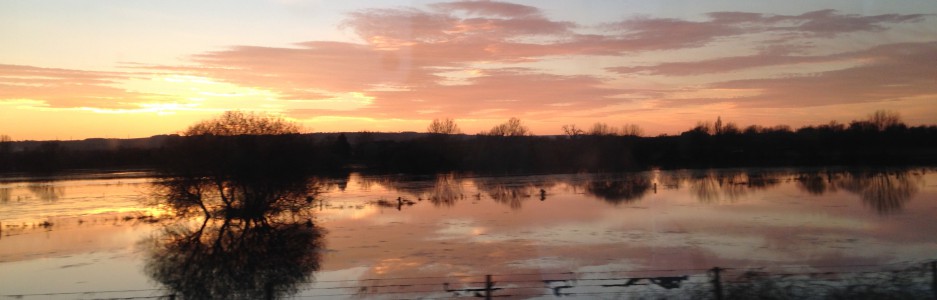
disturbance

And then, not quite the moment I’d mentioned the word ‘rhythm’ but not long after, the pattern has been disturbed. I forgot to bring my journal home from the studio, disrupting my normal writing time first thing in the morning. Then I realised that my carefully-herded into a less obstructive timeslot client meeting now required a fully powered laptop, but that that the ageing battery was at 73% and could not be relied on to last. Rushing over to the studio where the charger had been left meant that there was no time to play the piano before I left home.

And so on and so on..

In the wider scheme of things these minor turbulences are, of course, negligible. But I cannot live my creative nature patrolled by the legitimacy police. My creative work is to try to shimmy myself into the tiny cracks of the most vulnerable, neglected places of (my) being. That process is easily disrupted and I cannot help but be protective of it. A luxury, one might remark, and yes, in the context of what is going on around us that luxury is stark. But in the context of my own story it’s not quite so indulgent as that term implies, and perhaps if our world spent a little bit more time and care on its vulnerable places we might sleep easier.

So then, disturbance (category: small, agreed). As the etmology unveils, it is disorder, grief, agitation, turmoil, bewilderment, muddying, stagnation.

In the lightness of this season though, the disturbance, while apparent, is less of a suffering. In one of my favourite television programmes, the idea of ‘stirring up the waters’ is seen as having value, of offering a way out of weary patterns.

Has my rhythm already become a confinement?

Unknown.

I traversed all the minor disturbances, and now I am back in a more or less calm serenity. Or do I delude myself? I am awaiting a message and that message may have power to truly disrupt me, so then, yes, perhaps I am serene, but I am also aware of something stirring the nature of this calm existence, something beyond my reach and beyond my control.

And I wonder what it has to offer?

rim

I am teetering on the rim of hell.
Can you feel it too?
A certain kind of danger.
A lure.
A vat of swirling hate; all the discouragements of my life
kept
Waiting, rotting, writhing.
Clamouring.
L’appel du vide.

I am teetering and it will take only the most
infinitessimal inner shift to fall,
I gasp.
Precarious in my very breathing, existing fraught with
concentration.

It’s calling to me now, I hear you,
‘Oh poor you’, ‘no change’, ‘it always fails’, ‘what a
pitiful and lonely unreality; you continue to delude yourself’.
Perhaps you are what is most true?

Hell, I tell myself.
I WILL NOT GO IN THERE.
I will not keep company with dread, defeat and deep
disillusion.

My story will be different.
Only I can make it from another thread.
Those voices lie.

I am teetering on the rim of hell.
And I will not fall in there.
I steady myself.

creaking

Am I trying to 
inhabit a life
that no longer fits

Why do I creak?
Why do I fail to find the once familiar groove,
the seam in which all things
cohere?

I am displaced,
scattered and my senses
fail me.

Where am I trying to come home to?

I creak and hear my own 
groans escaping.
wild sounds that alarm
my younger self.

Am I becoming that?
Am I she who will
fail to meet imagination
with dignity?

I creak and now it is
a home-coming of sorts,

To my bones,
To parts of me long abandoned.

Have mercy.

year of the poem?

Well, it was to be the ‘year of the poem’, n’est-ce pas?  Poem philosophy, poem habits, poem diary, poem-editing course…  How has that worked out?  you might wonder.

Interesting…

What worked out is perhaps more than I could have possibly imagined.  An adventure beckoned.  I followed.  I grew.

Now, it is true that very little poetry was involved.  A tiny snippet.  But if you have ever looked closely, you will know that extraplorer is about discovering more beauty through writing.

So it turns out that this year may be more a ‘year of the poem’ than any poem-a-day year could ever be.  Something deeper than poetry happened in the adventure of my writers residency in a beautiful country.  I grew and grew and grew and found myself believing that I might be, possibly, maybe, no am, a real artist.

Over the summer, all the logic switches of my self-perception have been dismantled.  Here are a few as an example.  Test: Was I real artist?  Switches: Could I paint?  yes/no.  No.  Had anyone paid me? yes/no. No.  Was my writing recognised by anyone in particular?  yes/no. No.  Did anyone ever ask me to write them something (or paint, or draw, or dance)? yes/no.  No.

In the logic switches that governed my self-perception (I had not realised quite how many there were), I failed every test.

Over the summer, those logic switches were revealed as impostors.

Test: Was I a real artist?

Could I paint? yes/no.  Well, really, is this relevant?  I have something I want to communicate, I have a means to communicate it (writing).  I create canvases in people’s minds.  I am learning to do it better.  I don’t think it’s really all about the paint.

Had anyone paid me? yes/no.  Hmmm, well, of course being paid would be nice, very nice, but really, is this going to be the be all and end all of the decision, that someone has suddenly for who-knows-what reasons, decided to pay me?  I write all the time, I photograph, dance and play the piano.  I make beautiful transformations with people.  Are you really going to pin me down to the question has anyone paid?  People pay for drugs, cheap plastic tat in Poundland.  I don’t think I’m going to be aligning my identity with money anymore.

Was my writing recognised by anyone in particular?  yes/no.  Who do you mean by ‘in particular’?  This looks suspiciously where anyone who does love my writing gets put in the category ‘no-one in particular’ and some imaginary unknown people get put in the category ‘in particular’.  Who is this person who sets the rules for ‘in particular’?  What are they up to? What are their credentials?  Is it the same people who put on lacklustre and dispiriting exhibitions of arch postmodern commentary pseudo-paintings and we’re-all-doomed ‘installations’ purporting to represent the interactions between human beings and the environment?   Until this ‘in particular’-setting critic makes themselves better known, no more airtime for the ‘in particular’ category.

Did anyone ever ask me to write them something (etc)? yes/no.  Well, actually yes, a whole academic book.  Or at least they accepted it.  But that is beside the point, because who cares if I was asked.  Now it strikes me that this ‘anyone’ has an implicit lurking ‘in particular’.  It occurs me that ‘anyone’ is not just anyone, but someone.  In fact, yes, my nephews and nieces ask me to tell them stories all the time, my clients ask me to write them a training.  I’m asked to write talks and references.  Not what you had in mind?  Who cares!  I write all the time and I will write more!

So yes, I write poems, maybe I am a poet.  If I would like to be, I am; if I’m not ready, I’m not.  I write books, I am an author (this one is a fact already).  I take photos, I am becoming a photographer.  Who knows who I am, who I might be, who I might be becoming.  I am a mystery and I will do whatever I like.

The year of the poem has taken new directions.
As well it might.


last pelargonium

It was really quite white
when I found it,
the last pelargonium,
but I was on a budget
and it was reduced
so I bought it
although really I wanted a pink one.

It’s a ‘mårbacke’, said the florist.
It’s a traditional kind.
But it was white
so I doubted.
Do you know the place?
I didn’t.
It is the home of a famous writer,
Selma Lagerlöf.
A current barely stirred.

And anyway,
I was on a budget
so I bought it
although it wasn’t pink,
but white.

I stood my white pelargonium
in a mixing bowl.
I didn’t own a plant pot
and was on a budget.
A mixing bowl was all I had.

It stood, a little self-conscious
on my step.  Two flowers giving me
joy, but white, and no others
arrived to join them.

I looked up Lagerlöf:
A woman writer
native to this land,
winning prizes,
when women didn’t.

I wished my plant was pink.

I went away for work,
asked an almost-neighbour
to water my pelargonium.
She took it in its mixing bowl,
didn’t comment.

A while later I returned,
settled in and eventually went
to retrieve the last pelargonium.
It has probably died, I told myself
to preempt disappointment.
The neighbour may not have been there
all the time.  It’s been hot.

I wandered up the path,
curved around the corner.
I spied the last pelargonium
covered in flowers.

They were pink.